



“256TB Drive Is A Ticking Time Bomb”: Sandisk’s New SSD Unleashes Fury, Defies Speed Norms By Ditching Cache System
 By
Naomi Adeyemi
By
Naomi Adeyemi
| IN A NUTSHELL |
|
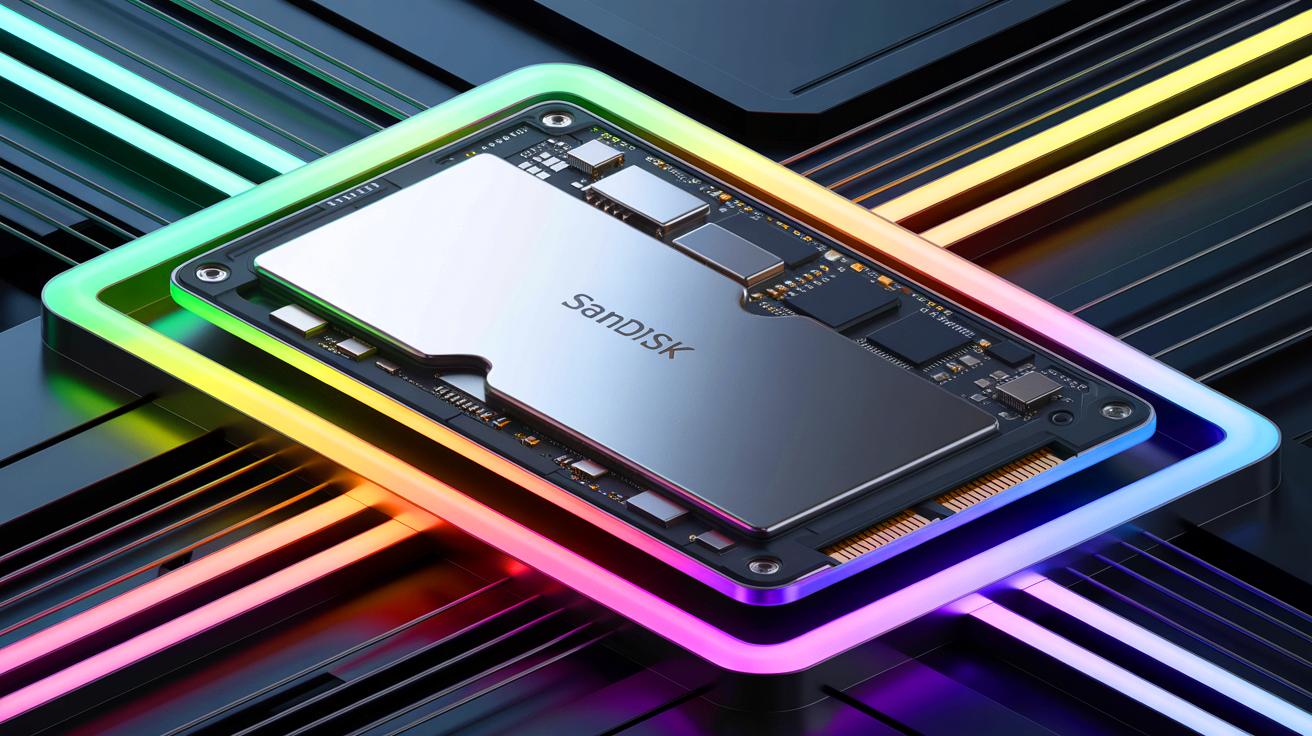
Sandisk’s recent announcement of its 256TB SSD, the UltraQLC SN670, marks a significant milestone in the realm of data storage, especially for AI and hyperscale infrastructure. This ambitious move comes with both excitement and skepticism. Bypassing traditional cache mechanisms, the SN670 introduces a new paradigm in SSD design, focusing on high-density storage. While the drive promises substantial increases in capacity, concerns about its performance, particularly under strenuous workloads, remain. As the industry anticipates its release, many are eager to see whether Sandisk’s bold claims will hold up in real-world applications.
Revolutionizing Storage with Direct Write QLC
At the heart of Sandisk’s UltraQLC SN670 is its groundbreaking use of Direct Write QLC technology. This approach eliminates the need for traditional SLC (Single-Level Cell) caches, which are commonly used to optimize write performance by temporarily storing data. By bypassing this step, Sandisk aims to simplify the data writing process and improve power-loss safety. However, this innovation comes with tradeoffs. Without the buffer provided by SLC caches, the SN670 may face challenges in handling short-burst workloads efficiently.
Despite these potential drawbacks, Sandisk claims that their Direct Write QLC method offers higher reliability and data integrity. This could be particularly advantageous for industries where data stability is paramount. Yet, the lack of public benchmarks and IOPS (Input/Output Operations Per Second) performance numbers leaves many industry experts cautious. The true effectiveness of this technology will only be revealed once it undergoes rigorous testing.
The Technical Backbone: BiCS 3D NAND
The UltraQLC SN670’s impressive capacity is supported by a sophisticated 218-layer BiCS 3D NAND architecture. This advanced design allows for a compact yet powerful storage solution, capable of housing vast amounts of data in a relatively small footprint. The integration of CBA (CMOS directly Bonded to Array) technology further enhances its capabilities, offering a 2Tb die that contributes to the drive’s high-density storage.
Connecting through a PCIe Gen5 NVMe interface, the SN670 is part of Sandisk’s new UltraQLC platform. This next-generation interface is designed to handle the increased data transfer rates required by modern applications, particularly in AI and hyperscale environments. However, the absence of concrete performance data has left potential users and industry analysts waiting for more information. Until Sandisk releases detailed benchmarks, the true impact of these technological advancements remains speculative.
Challenges in Performance and Reliability
While the SN670’s design promises several advantages, it also faces potential hurdles. The removal of SLC caches could lead to slower short-burst writes and inconsistent performance under heavy loads. These challenges are particularly concerning for applications requiring rapid data processing and low latency. The increased demands on the controller could further exacerbate these issues, affecting the drive’s responsiveness during intensive workloads.
Sandisk has attempted to address these concerns by highlighting features like Dynamic Frequency Scaling, which purportedly boosts performance by up to 10 percent without increasing power consumption. Additionally, the Data Retention profile aims to extend the drive’s lifespan by reducing wear. However, these claims are yet to be substantiated with empirical data. Industry experts remain cautious, noting that past iterations of Sandisk’s enterprise drives have shown limitations when using QLC NAND compared to TLC-based models.
Looking Ahead: The Future of High-Density Storage
Sandisk’s 256TB SSD represents a bold step toward the future of data infrastructure. While the drive is not yet a viable option for mainstream users, it symbolizes a shift towards higher-capacity solutions tailored for specialized industries. As the demand for data storage continues to grow, innovations like the SN670 could pave the way for more efficient and reliable systems.
The SN670’s eventual release in U.2 form will be closely watched by industry experts and potential users alike. The drive’s success will depend on its ability to meet performance expectations and offer tangible benefits over existing solutions. As Sandisk positions itself at the forefront of storage innovation, the question remains: will their pioneering efforts set a new standard in the industry, or will the tradeoffs outweigh the benefits?
As the tech world eagerly anticipates more detailed information on Sandisk’s UltraQLC SN670, the broader implications for data storage and infrastructure are profound. How will other industry players respond to this new technology, and what further innovations might we see in the quest for ever-greater storage capacities?