


Razer’s Basilisk V4 Pro upgrades its tilt wheel and battery
The $169.99 Basilisk V4 Pro arrived October 8 with a cheaper V4 HyperSpeed and a dock. Battery ratings vary by connection, from 275 hours on Bluetooth to about 54 at 8,000 Hz.
 By
Declan Moriarty
By
Declan Moriarty
Razer introduced the Basilisk V4 Pro on October 8, a new flagship version of its ergonomic gaming mouse, together with a cheaper Basilisk V4 HyperSpeed and a Mouse Dock V2 Pro charger. All three are on sale now, directly from Razer or through selected retailers, according to Playday. Engadget rounds the prices to $170, $110 and $70. On Razer’s American store, techmymoney.com reports the exact figures as $169.99, $109.99 and $69.99. Those prices apply to the United States only, and no other market was priced in the release.
In brief
- All three are on sale now, directly from Razer or through selected retailers, according to Playday .
- The review adds a stated tracking accuracy of up to 99.8 percent and lists software helpers such as Frame Sync, Smart Tracking and a Sensitivity Matcher that copies the sensitivity of a previous mouse.
- Razer’s US page also showed $25 in store credit on launch-week orders when techmymoney.com checked on October 8.
A wheel with four scroll modes and more buttons
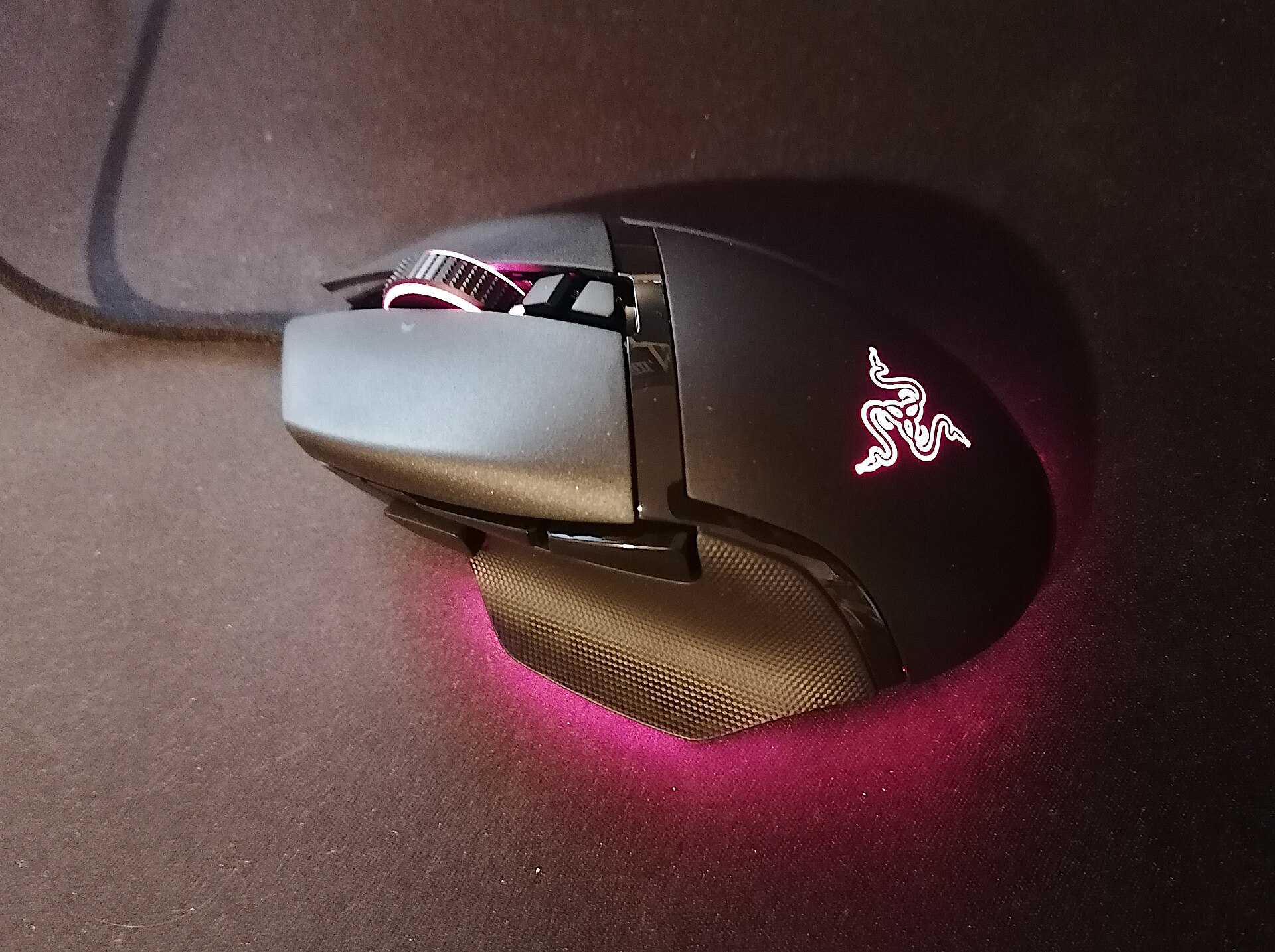
The headline change is the HyperScroll Tilt Wheel Gen-2. It keeps the 24-step Tactile mode and adds a Precision Tactile mode with 48 steps, which Razer pitches at hotbars and ability menus. Free-Spin is meant for long scrolls, and Smart-Reel switches between the two on its own depending on how fast the wheel is turned. All four modes can be tuned in the Synapse software, which also gains a Virtual Acceleration setting with five levels.
The body is reshaped, with an extra side button and an M1 edge button, and the multi-function trigger has been moved for what Razer calls a more natural reach. In total the mouse has 14 customizable controls, against 12 on the V4 HyperSpeed. A review on basic-tutorials.com weighs the black version at 100 grams and the white one at 101 grams, about 12 grams under the 112-gram Basilisk V3 Pro 35K, and says the difference is obvious when switching between the two.
The new optical switches are rated for 100 million clicks, with 12 percent lighter actuation according to techmymoney.com. A Perfect 180 function turns the in-game view half a circle at the press of a button, which is aimed at players who use low sensitivity in shooters.
Battery ratings depend on the connection
The 275-hour figure in the headlines is a Bluetooth 6.2 rating. Over the HyperSpeed Wireless Gen-2 link at a 1,000 Hz polling rate, Razer rates the V4 Pro at up to 200 hours. Engadget calls that link Wi-Fi, but the other reports tie it to Razer’s 2.4 GHz connection. The release does not give a rating for the 8,000 Hz polling that the mouse also advertises. The review reports that Razer expects around 54 hours for users who stay at that rate all the time.
| Model | HyperSpeed wireless | Bluetooth |
|---|---|---|
| Basilisk V4 Pro | Up to 200 hours at 1,000 Hz | Up to 275 hours |
| Basilisk V3 Pro 35K | 140 hours | 210 hours |
| Basilisk V4 HyperSpeed | Up to 140 hours | Up to 225 hours |
Against the V3 Pro 35K, the new flagship gains 60 hours on the HyperSpeed link and 65 on Bluetooth, even though it is lighter. The V3 figures come from the review’s comparison.
Sensor, polling rate and pairing
The V4 Pro uses the Focus Pro 50K Optical Sensor Gen-3, specified for a maximum of 50,000 DPI, with 930 IPS tracking speed and 90 G of acceleration. The review adds a stated tracking accuracy of up to 99.8 percent and lists software helpers such as Frame Sync, Smart Tracking and a Sensitivity Matcher that copies the sensitivity of a previous mouse. Dynamic Sensitivity offers three preset curves named Classic, Natural and Jump, or a custom one.
HyperSpeed Wireless Gen-2 supports 8,000 Hz polling both wirelessly and over a cable. According to the review, that works without a separate accessory, whereas the V3 Pro 35K needed the optional Mouse Dock Pro to reach full performance. The review also relays Razer’s average click latency of 0.204 milliseconds at 8,000 Hz, compared with 0.461 milliseconds for the previous wireless generation.
One mouse can be paired with up to five devices, split between the HyperSpeed link, Bluetooth with up to three devices, and a USB-C cable. Switches on the underside change the active source without software, so a single mouse can serve a gaming PC, a laptop and a tablet. The box contains a mini dongle with a USB adapter and a fabric-wrapped USB-A to USB-C cable.
The V4 HyperSpeed is the lower-priced route. It weighs 94 grams, uses a Focus X 33K sensor, has a 4-way tilt wheel with tactile and free-spin modes along with 12 customizable controls, and Engadget notes switches rated for 100 million clicks there too.
The Mouse Dock V2 Pro
The dock charges the mouse magnetically when it is set down on it. It has an integrated 8,000 Hz transceiver, a charge status indicator, an anti-slip base and 8-zone Chroma underglow. Razer says compatible Razer mice and keyboards can also connect through it, which is meant to keep a desk tidy. Wireless charging is not built into the mouse itself: according to Razer’s FAQ, as quoted by techmymoney.com, buyers swap the mouse’s cover puck for the one that ships with the dock. The V4 HyperSpeed works the same way.
Is it worth $169.99?
The review is the only hands-on source in the set. It describes the V4 Pro as a step up in nearly every area from the V3 Pro 35K and calls the $10 price premium over that model moderate. It presents the V4 Pro as the most technically complete mouse in the Basilisk series for people on an older Basilisk or a competitor’s mouse. For owners of a V3 Pro 35K who are already happy, it sees the lighter weight, the native 8,000 Hz polling and the extra scroll mode as the main reasons to upgrade.
It also names one trade-off: the V4 Pro has 7 lighting zones instead of 13, which matters to people who care about RGB customization. Buyers who want the full 8,000 Hz rate should keep the reported battery estimate in mind. Razer’s US page also showed $25 in store credit on launch-week orders when techmymoney.com checked on October 8.
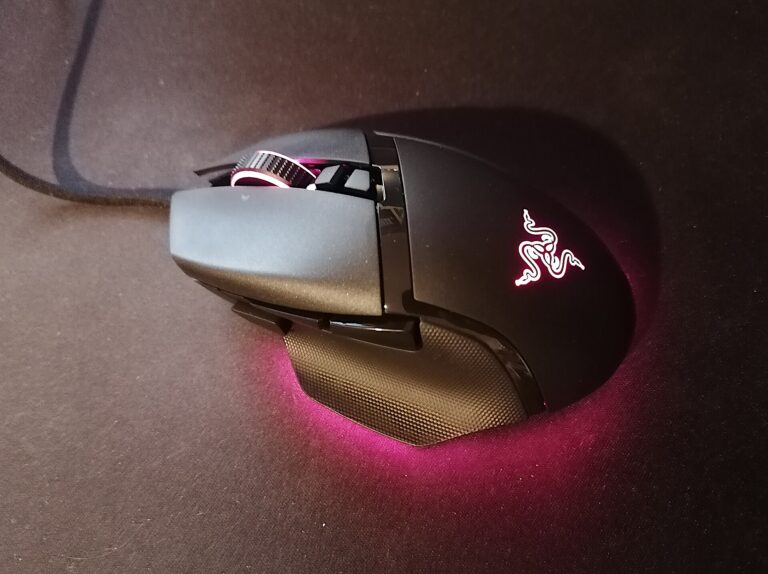
Featured image. Source: Wikimedia Commons. Credit: Chaddy. License: CC BY-SA 4.0.
Continue reading