


What to expect from tech in 2025: Trends and predictions
 By
Rhys Llewellyn
By
Rhys Llewellyn

As the world shifts restlessly toward 2025, the technology sector hums with the energy of imminent transformation. From boardrooms at Apple and Google to bustling engineering labs at Microsoft, Amazon, Sony, and Intel, the landscape feels charged with a sense of both promise and unpredictability. Headlines focus not just on the latest gadgets or cloud milestones, but on deeper questions of sustainability, AI’s growing edge, and the looming specter of a profoundly altered workforce. Even the giants, Tesla’s vision for autonomous vehicles, IBM’s bold research, Samsung and NVIDIA’s hardware leaps, sense the coming tides. Today, trends aren’t just about raw power or speed; precision, ethics, and impact take center stage. Here’s an inside look at the shifts and breakthroughs experts and industry veterans say will shape the way we live and work, perhaps faster and more lastingly than we imagine.
AI in 2025: The Playing Field Levels and Gets Real
2025 promises an inflection point for artificial intelligence, where much of the initial hype recedes to uncover pragmatic, sector-specific impacts. As large language models (LLMs) go mainstream, open-source communities and cloud platforms accelerate their adoption. Companies like Microsoft and Google will lead the charge in making LLMs accessible and efficient, while hardware titans, NVIDIA, Intel, and Apple, focus on smarter, faster chips dedicated to AI tasks.
- Small data becomes the new gold: Instead of chasing bigger data lakes, businesses home in on targeted, high-quality information, streamlining analysis and trusting their insights.
- Immediate, practical AI: Organizations demand measurable ROI from artificial intelligence, integrating tailored agents for finance, manufacturing, and customer service.
- Environmental footprint in focus: As data centers swell, the tech community, led by IBM and Amazon, steps up with energy-efficient algorithms and transparent reporting.
Key impacts of accessible AI systems
As cloud providers like Amazon and Google roll out “AI-as-a-service” tools, and open-source LLM deployment becomes routine, small and midsize businesses gain unprecedented power. Decision-making speeds up, with customer questions resolved autonomously, and conversational interfaces powered by generative AI replace dated workflows. Ethical questions turn from theory to operational necessity, just as IBM and Microsoft launch solutions that trace AI’s energy use down to the kilowatt. For the first time, the gap between AI’s promise and its real usefulness narrows decisively.
- Open-source innovation tears down barriers to entry.
- Cloud integration makes AI affordable for all sectors.
- Efficiency and sustainability become explicit selling points.
Shifting the Tech Landscape: Drones, Robotics, and Physical Innovation
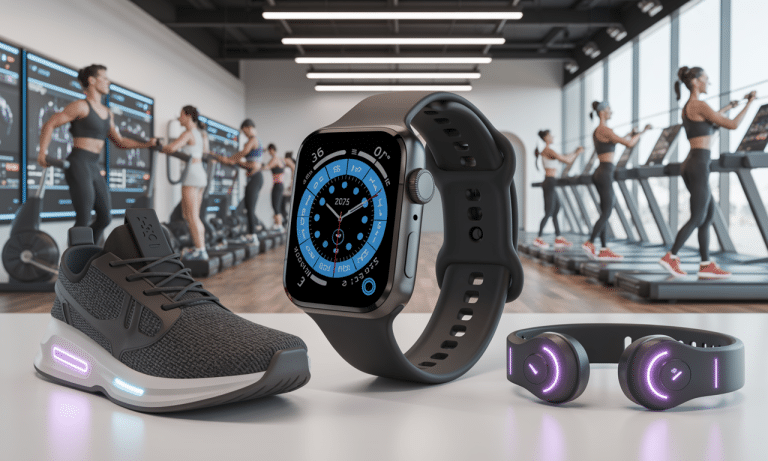
Beyond software advances, 2025 sees a surge in “smart hardware”, particularly drones, robotics, and next-gen wearable tech. If the past decade belonged to screens, the coming years will belong to autonomy, reliability, and collaboration between machines and humans. Companies like Tesla spike interest in electric vertical take-off and landing (eVTOL) craft, while Amazon and Apple quietly launch Drone-as-a-Service pilots that redefine logistics and agriculture.
- Widespread drone integration: Agriculture, disaster relief, and logistics are transformed by cost-effective, energy-efficient drones, championed by quick-to-market startups and major players alike.
- Embodied intelligence: Robotics crosses a frontier, now able to adapt, learn, and interact in dynamic environments, driven by sensor fusion, AI, and next-gen battery solutions.
- Wearables become diagnostic tools: Samsung and Sony race to miniaturize chronic health monitors, with advanced ML models detecting biomarkers and preempting disease progression.
How robotics and drones shape daily life
Edge computing from Intel and NVIDIA enables real-time processing in the field, drones deliver medicine in remote towns, robots assist in factories, and wearable tech alerts users to health risks long before symptoms arise. Protocols for smart machine-to-machine communication ensure coordination on city streets, farms, and in hospitals. As Tesla pushes boundaries on autonomous vehicles, regulators, led by global think tanks and research from IBM, zero in on safety and standardization. Daily life reorients around intelligent, responsive machines, and the new opportunities they unlock.
- Everyday tasks, from deliveries to diagnosis, are automated.
- Machine collaboration increases human productivity and safety.
- Wearable sensors make preventive healthcare routine.
Tech Workforce and Business Models: Resilience Amid Disruption
For all the promise of AI and automation, 2025 challenges the very fabric of the job market. The traditional “growth at any cost” mantra falters as precision replaces scale. Companies big and small, whether Apple, Samsung, or an emerging startup, pivot to operational efficiency, data-driven KPIs, and a sharpened focus on retaining essential talent amid immense change. Yet, a confluence of factors darkens the horizon: mass federal layoffs, AI-driven job displacement, and broad policy shifts compound pressures for workers.
- Reluctant retention replaces quiet quitting: Employees, fearing a volatile market, stay in roles they don’t love, ratcheting up disengagement and tension.
- Competitive job market: Veteran tech professionals from Microsoft and Amazon compete with federal staffers and displaced workers, intensifying the war for shrinking opportunities.
- AI augments, but also replaces, many roles: Automation in retail, logistics, and analytics means constant reskilling and rethinking of job descriptions.
Business survival strategies for the new era
Retailers, learning from the likes of Apple and Sony, double down on the physical experience: music, lighting, and scent become as critical as price or product. Meanwhile, the rise of Gen Z accelerates the shift toward conversational interfaces, with Amazon and Google rolling out personalized, voice-powered IT support. Managers everywhere recognize that employee engagement must be rebuilt from the ground up, leaning into flexibility, transparency, and proactive support to avoid widespread “reluctant retention.”
- Store ambience and customer experience become the top differentiators.
- AI-powered self-service tools empower both customers and employees.
- Continuous learning platforms from companies like IBM and Microsoft help staff keep pace with evolving roles.
Sustainability, Security, and the Ethics of Tech Leadership
As the limits of pure innovation give way to real-world concerns, 2025 finds sustainability, cybersecurity, and ethics central to every tech conversation. With energy consumption now an explicit metric for AI solutions, Apple and Samsung showcase new green designs, while IBM and Intel invest in low-power chips and eco-friendly manufacturing. The specter of data feudalism, greenwashing, and mis/disinformation leads every major tech player to evaluate and bolster their commitment to transparency and accountability.
- Widespread adoption of eco-conscious computing, including nuclear-powered data centers and carbon-neutral supply chains.
- Next-gen cyber defense leverages machine-learning for predictive threat detection, with Microsoft and NVIDIA leading cutting-edge research.
- Policy, standards, and ethics finally catch up: Academia, industry, and governments collaborate to regulate AI, define best practices, and support sustainable progress.
Emerging challenges and responses in tech stewardship
Industry alliances, whether driven by Apple, IBM, or ambitious startups, turn to shared policies on wearable data, brain-computer interfaces, and the use of AI in healthcare. Stakeholders see that credibility, not just innovation, earns trust and sets the stage for future growth. The narrative in 2025 is clear: technology leadership means balancing performance with planet, profit with principle.
- Cross-industry coalitions codify standards on privacy, safety, and accessibility.
- Real-world impact, on health, the environment, and society, becomes the key yardstick of technological success.
- Transparency and ethical design move from marketing slogans to the foundation for global tech progress.