

A mostly 3D-printed RC jet sets its sights on Mach 0.8
Bath graduates have flown a printed jet called the Kingfisher, and their larger Kingchaser now targets a nine-year-old Guinness speed record for models.
 By
Declan Moriarty
By
Declan Moriarty
A team of University of Bath graduates has flown a jet-powered, largely 3D-printed remote control aircraft, and is now building a bigger successor meant to reach Mach 0.8.
In brief
- The Mach Initiative, formed by University of Bath graduates, posted the Kingfisher’s maiden flight on YouTube.
- The Kingfisher’s Jetcat P60 turbine was meant only to prove jet flight, not to set a record.
- The Kingchaser is 20% larger, weighs 9 kg and swaps PET-CF for PPS-CF in its engine housing.
- No date has been announced for the record attempt.
The group calls itself the Mach Initiative, and its goal is a Guinness World Record for the fastest model aircraft, a title German pilot Neils Herbrich has held for nine years. The plane that flew is the Kingfisher, whose maiden flight the team uploaded to YouTube. The record contender is a different machine, the Kingchaser, built from PETG, PPS-CF, carbon-fiber rods and aluminum. It has a speed target, not a result: only the Kingfisher’s flight has been shown, and no date for the record attempt has been announced.
From a fan-driven test model to a working jet
The project did not start with a turbine. Its first miniature prototype, the Kinglet, was printed in PETG, PET-CF and some PLA, and flew on an electric ducted fan, a choice the team made because it let them iterate cheaply and safely. The airframe was modular, so individual sections could be redesigned quickly and a broken part swapped out without reprinting the entire body.
Once the Kinglet performed well enough, the team moved up to the Kingfisher, the first version with a real jet engine.
That engine was never the record tool. According to the Mach Initiative, the P60 lacks the power to beat the record and was chosen purely to prove the airframe could fly under jet propulsion. Most of the Kingfisher is still printed PETG, but the engine sits in a housing of annealed PET-CF, held by aluminum hardware, while an aluminum skeleton stiffens the rest of the structure.

Why the Kingchaser replaced a planned upgrade
The engineers originally pictured a Kingfisher MK2 carrying a 150Nm jet engine and aiming for 614 mph (988 km/h), well beyond the 434 mph recorded by the world’s fastest electric drone. They changed course and designed a new, larger aircraft instead.
| Feature | Kingfisher | Kingchaser |
|---|---|---|
| Size | Baseline design | 20% larger, 9 kg (20 lb) |
| Engine housing | Annealed PET-CF | PPS-CF skinned with carbon fiber layers |
| Engine mounting | Aluminum hardware | Aluminum and steel reinforcement |
| Internal frame | Aluminum skeleton | Carbon fiber rods |
| Heat protection | Not part of the reported build | Titanium exhaust sheets and aluminum tape |
The housing material changed for a practical reason. When the team annealed a larger PET-CF housing, it warped, possibly because the part heated unevenly. Swapping the aluminum skeleton for carbon fiber rods cut weight and reduced the number of custom CNC-machined parts the build needs. The external shell remains mostly PETG, a common printing filament.
Controlling a printed plane at high speed
Electronics have their own owner on the team: one member is dedicated to flight control and avionics. The Kingchaser carries a fully instrumented avionics package designed to log as much telemetry as possible, plus a first-person view (FPV) system so the pilot can fly it more precisely at speed.
Moving control surfaces against fast airflow takes muscle. The elevons are driven by high-torque servos rated at 70 kg-cm (5.06 ft-lbs), because shifting those flaps at speed demands considerable force.
As Tom’s Hardware reported, the team documents its progress in build logs published on the Mach Initiative’s YouTube channel, where followers can track the Kingchaser before any record run is scheduled.
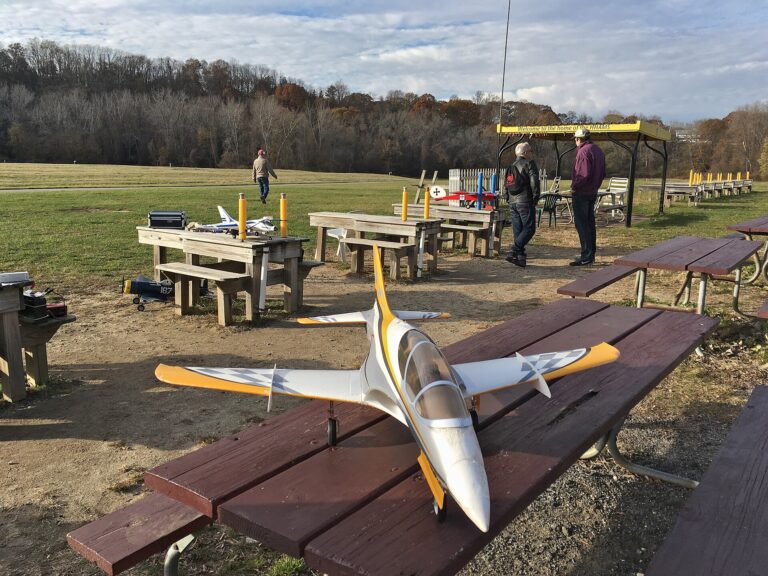
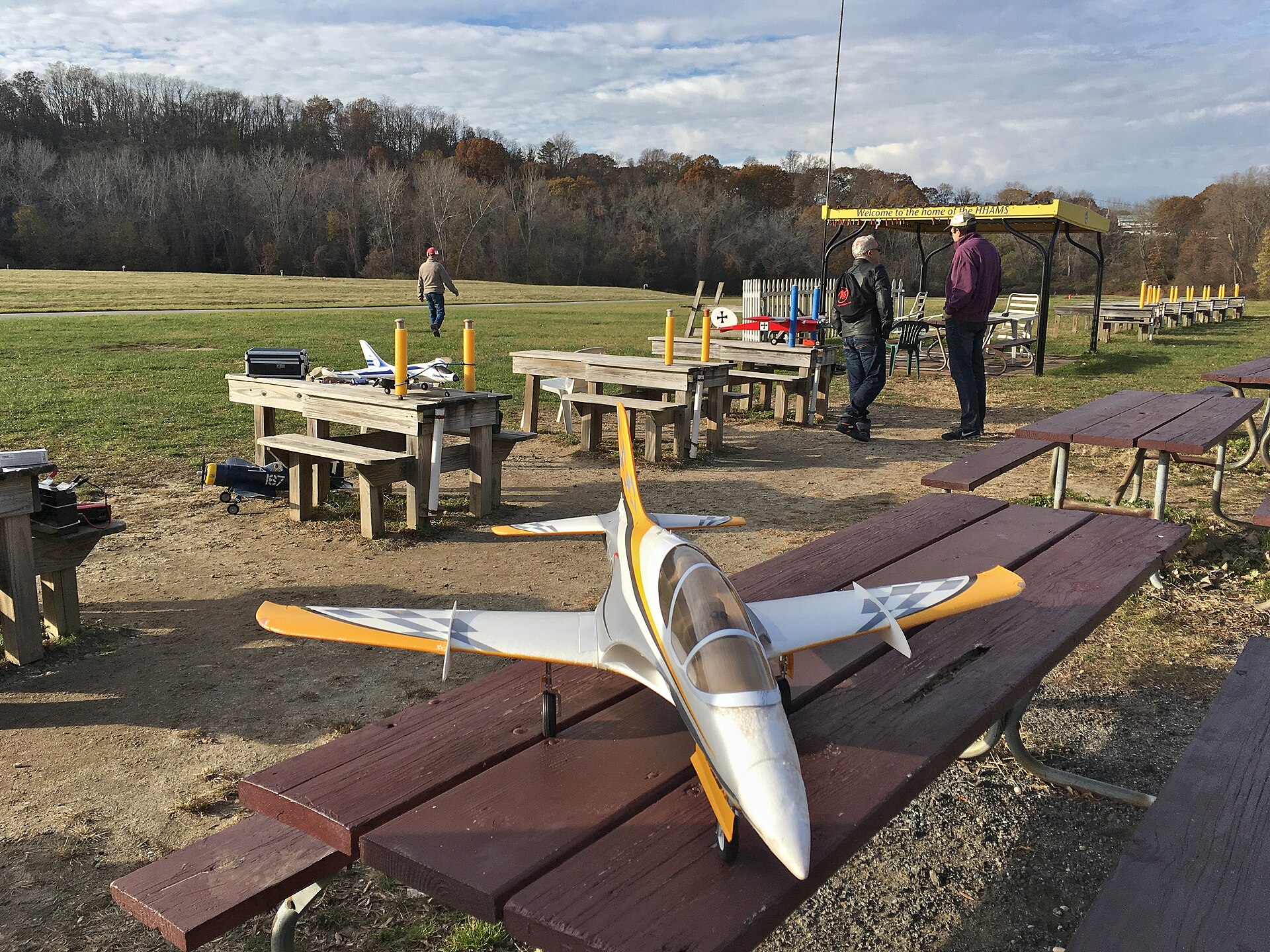
Featured image. Source: Wikimedia Commons. Credit: Fred Hsu on en.wikipedia. License: CC BY-SA 3.0.
Continue reading