



How artificial intelligence is changing the mobile landscape
 By
Rhys Llewellyn
By
Rhys Llewellyn
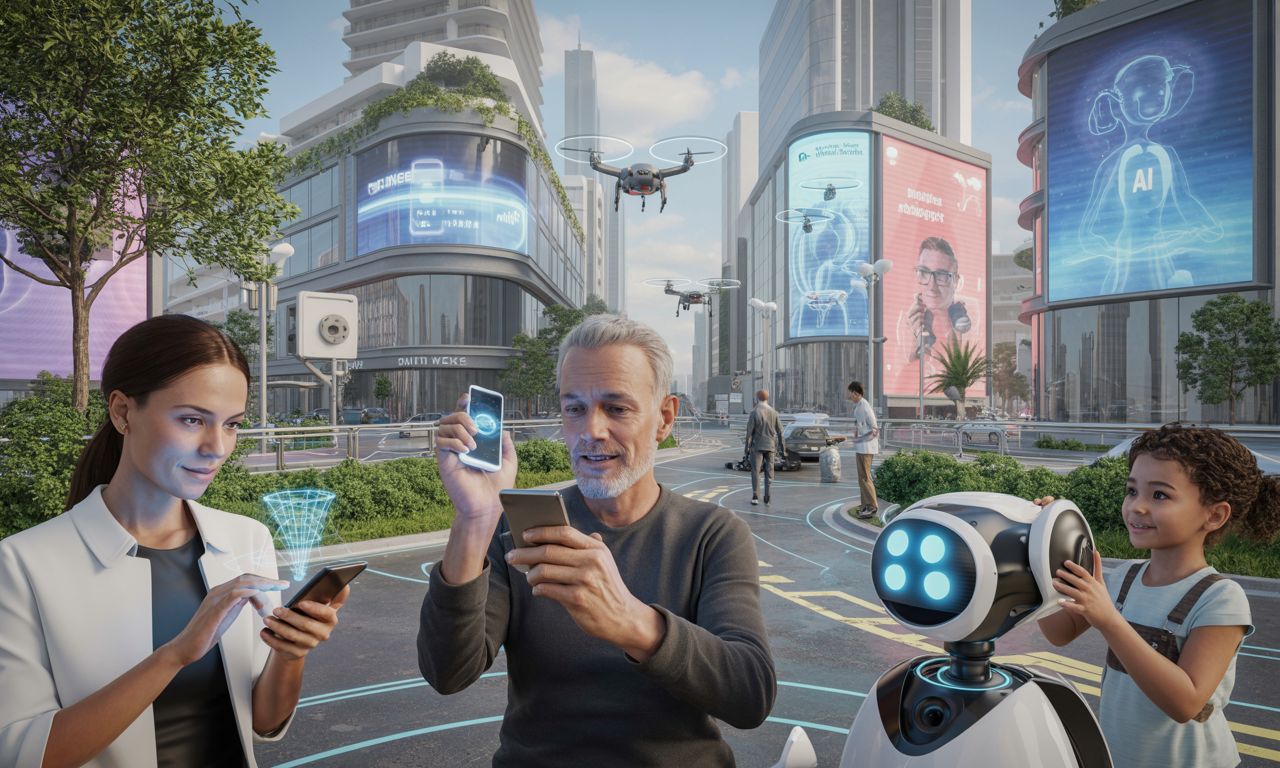
Every day, the boundary between science fiction and reality blurs a little more as artificial intelligence reshapes the world in our pockets. The mobile industry, an arena once dominated by hardware prowess, now evolves at an electrifying pace under the influence of intelligent algorithms. Giants like Apple, Google, Samsung, Huawei, and challengers such as OnePlus or Sony, weave AI invisibly into our daily digital rituals. From waking up to the soothing voice of a virtual assistant to tracking health metrics, getting personalized news, or navigating cities seamlessly, users rarely realize how many AI-powered gears spin beneath those glass screens. As new players like Qualcomm and NVIDIA innovate mobile chipsets and edge computing, and veterans like IBM and Microsoft push AI-driven cloud solutions, a quietly coordinated revolution crafts ever more intuitive apps, tailored recommendations, and invisible security layers. With 2025 on the horizon, this AI-fueled transformation is no longer a promise: it is a paradigm shift unfolding in the palm of your hand.
Artificial Intelligence Redefining Mobile User Experience
For millions, a smartphone already feels like a personal concierge: one that understands speech, suggests what to eat, and even predicts messages before they’re sent. This alchemy is courtesy of AI’s rapid integration into mobile platforms, especially visible through the flagship devices of Apple, Samsung, and Huawei. These brands harness machine learning to analyze usage patterns in real time, translating them into ultra-personalized content, push notifications, or app suggestions tailor-made for every individual.
- Intelligent recommendations for apps, media, or products based on user habits
- Voice assistants like Siri or Google Assistant streamlining multitasking
- Context-aware notifications that predict user needs, such as traffic alerts or weather updates
- Adaptive battery management driven by AI to optimize charging and usage patterns
By anticipating intent rather than passively waiting for commands, AI ensures every tap feels thoughtful, sometimes even prescient, in its design.
How AI Transforms Interaction: From Voice to Touch
Where once a screen of static icons defined a smartphone, now ever-evolving interfaces learn and morph around the user. Google and Apple deploy sophisticated Natural Language Processing, letting users bypass typing altogether with conversational commands. At the same time, Samsung and Sony explore multimodal interaction, merging gesture recognition, voice, and even emotion detection for a richer, frictionless experience.
- Voice-to-text capabilities making communication seamless
- Facial recognition and biometric login powered by new AI algorithms
- Real-time language translation enabling global connectivity
With each layer, mobile becomes more than a device: it becomes a responsive companion, quietly adapting to the user’s daily rhythm.
AI-Driven App Development: New Opportunities for Innovation
While consumers delight in smarter apps, the impact runs just as deep behind the scenes. Developers, supported by platforms from Microsoft or IBM, now leverage AI tools that automate repetitive tasks, detect bugs, and optimize performance. Frameworks accelerated by NVIDIA GPUs and Qualcomm mobile chipsets deliver real-time feedback, speeding app deployment and streamlining updates, ushering in a new wave of creativity across both iOS and Android ecosystems.
- Automated code generation for rapid prototyping
- Predictive analytics guiding feature development
- Continuous integration/testing with AI-driven diagnostics
- Contextual adaptation of apps, from energy consumption to UX layout
This reshapes the very nature of app creation: less time troubleshooting, more time crafting features that surprise and delight.
Case Study: Health Apps and Predictive AI
In healthcare, the synergy is profound; Apple leads with AI-integrated wellness apps that suggest lifestyle changes based on vital sign tracking, while Huawei and Samsung leverage predictive maintenance to maximize device longevity and optimize energy use. Even prescription reminders or mental health interventions arrive just in time, driven by continuous machine learning from user patterns.
- Fitness recommendations tailored to biometric data
- Medication reminders synced with user routines
- Real-time diagnostic support through chatbots and virtual nurses
The result is digital health guidance that feels proactive and genuinely personalized, often before the user even asks.
Marketing, Security, and Ethical Horizons in an AI-Mobile Ecosystem
With AI at their side, marketers discover precise targeting opportunities as mobile algorithms parse user data to unlock unprecedented personalization. Qualcomm and NVIDIA underwrite ad delivery with edge AI, while Google and Microsoft orchestrate campaign analyses in the cloud. Meanwhile, security pioneers such as IBM fortify devices with real-time anomaly detection and instant response to emerging threats.
- Hyper-personalized campaigns built on user preferences
- Optimized ad spend through intelligent bidding and placement
- Anomaly and malware detection powered by mobile neural networks
- User privacy safeguards including on-device encryption and data anonymization
Yet as these capabilities flourish, questions about privacy and algorithmic fairness take the stage, forcing industry leaders to design not just for performance, but for trust and transparency.
AI, IoT, and 5G: The Next Layer of Connected Intelligence
The horizon expands as AI fuses with the Internet of Things and 5G. Devices from OnePlus, Apple, and Samsung now link seamlessly with home sensors, wearables, and vehicles, orchestrated by AI to deliver context-aware automation. Qualcomm’s chips empower low-latency computation right at the device edge, while 5G networks, deployed globally by 2025, fuel instantaneous data exchange and real-time collaboration between all corners of the connected world.
- Smart home automation optimized by learning user routines
- Predictive maintenance alerts for IoT-connected appliances
- Seamless multi-device collaboration (e.g., phone-to-car or watch-to-speaker)
As AI, ultra-fast connectivity, and a web of sensors unite, what was once passive hardware now assumes an active, anticipatory partnership in our daily lives: redefining what mobile truly means in 2025 and beyond.