


The impact of 5G on mobile user experience explained
 By
Rhys Llewellyn
By
Rhys Llewellyn
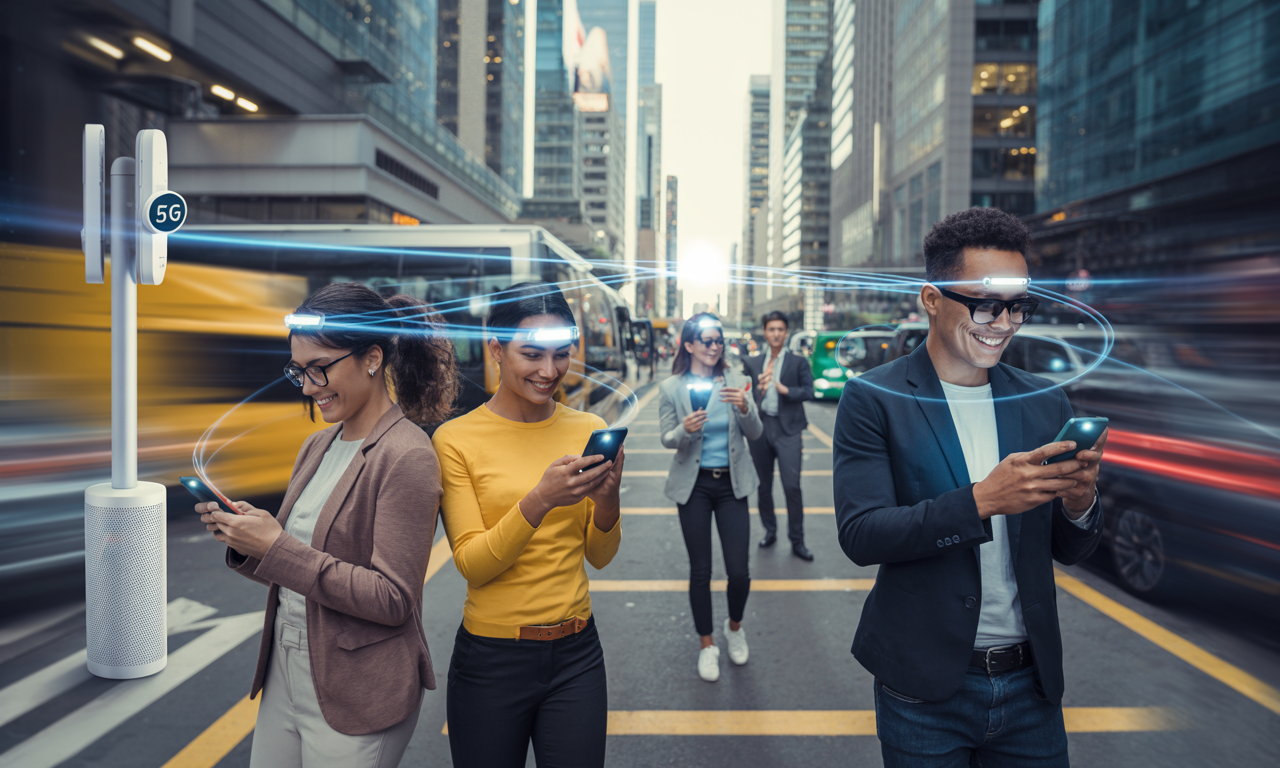
The world of mobile technology spins faster than ever as 2025 approaches, with billions of devices hungry for speed and seamless connection. Not long ago, the vision of instantly transmitting torrents of data to countless devices, planes, watches, refrigerators, phones, was reserved for futurists. But as networks light up with 5G signals from partners like Verizon, AT&T, and Vodafone, that futuristic vision is rapidly materializing. Tech titans, Samsung, Apple, Huawei, OnePlus, Xiaomi, Nokia, and powerhouses like Qualcomm compete to harness and showcase 5G’s transformative magic. Mobile users, whether streaming high-definition video on the go, gaming in real time, or orchestrating smart homes, are beginning to experience a new standard: ultra-fast, reliable, and immersive. Here’s how 5G is subtly turning everyday interactions into something extraordinary, reframing the very meaning of user experience in the palm of your hand.
5G’s Game-Changing Features and How They Shape Mobile Experiences
A new mobile era brings novel demands, and 5G answers with an arsenal of groundbreaking features:
- Peak data rates reaching up to 10 Gbps, about ten times faster than 4G LTE.
- Ultra-low latency near 1 millisecond, vital for real-time actions and instant feedback.
- Mass connectivity, supporting up to a million devices per square kilometer, giving rise to bustling IoT ecosystems.
- Enhanced network reliability for stability even in crowded places or during peak usage.
- Greater energy efficiency, protecting battery life and sustainability initiatives.
With these capabilities, developers from Apple to Xiaomi are rewriting how apps load, function, and interact with users. Qualcomm’s chipset innovations, paired with Samsung’s and Huawei’s pioneering devices, ensure humans experience these technical leaps firsthand, faster downloads, smoother streams, and most importantly, nearly invisible wait times. The once-impossible dream of “instant everything” is becoming routine, pushing user expectations even higher.
Technical Marvels: Under the Hood of 5G
Unlike its predecessors, 5G harnesses both sub-6 GHz frequencies for broad coverage and millimeter-wave (mmWave) bands for blistering speed. Technologies like Massive MIMO and beamforming, heavily invested in by Nokia and Vodafone, permit signals to target users directly, minimizing interference and maximizing performance. Orthogonal Frequency-Division Multiplexing (OFDM), championed by chipset leaders like Qualcomm, increases both efficiency and reliability, the backbone for uninterrupted AR, VR, and high-resolution content delivery.
- Sub-6 GHz delivers dependable, wide-area coverage, key for urban and rural users alike.
- mmWave serves dense city centers with speed, fueling HD streaming and real-time navigation.
- Network slicing creates custom lanes tailored to specific needs, from autonomous vehicles to multiplayer gaming.
From Apple’s seamless FaceTime in crowded train stations to OnePlus’ lag-free cloud gaming, these technical advances reshape what’s possible on the move.
Speed, Latency, and the New Meaning of Responsiveness for Mobile Users
For users, 5G’s impact is as much about feeling as it is about figures. The sense of lag or buffering, common with 4G, is fading into memory. With streaming apps and mobile games running on devices from Samsung, Huawei, and Xiaomi, instantaneous feedback becomes the norm rather than a luxury. Latency as low as 1 millisecond means even the most demanding AR experiences or video calls unfold naturally, free from frustrating delays.
- Smoother video calls on platforms optimized for Apple and Samsung, even on bustling public Wi-Fi.
- Interactive gaming with OnePlus or Xiaomi devices, supporting real-time multiplayer showdowns.
- On-the-go financial trading or remote surgeries powered by 5G’s near-zero delay, precision meets peace of mind.
For urban professionals surfing crowds in Chicago or Mumbai, the difference is palpable: what once stuttered now glides, from unlocking smart doors to commanding home assistants remotely. The bar for “snappiness” in mobile UX is being redefined, one tap at a time.
Real-Time Application Showcase Across Industries
User expectations rapidly adapt; industries are forced to innovate. Healthcare apps for remote monitoring flourish with super-reliable 5G infrastructure from Verizon and AT&T. In retail, Nokia-powered networks let users try on clothes virtually or get personalized promos with zero lag. Hospitality brands, reliant on smooth in-app check-ins and concierge chats, see sky-high satisfaction as 5G lets them personalize service at scale.
- Telemedicine apps delivering vital readings instantly to Huawei or Apple smartwatches.
- Shopping with real-time AR previews on Samsung and Xiaomi devices in Vodafone-powered malls.
- Entertainment giants offering immersive event streaming with Qualcomm-enhanced platforms.
This is not just about technical upgrade; it’s about transforming ordinary habits into extraordinary digital experiences.
The Expansion of Connected Ecosystems: 5G, IoT, and Everyday Life
5G’s true promise unfolds as it connects not just phones, but an entire web of devices orchestrating homes, businesses, and cities. Smart home apps from Apple and Samsung sync with security, lighting, and climate systems, all managed from a single interface and powered by relentless connectivity from Verizon and AT&T. As wearables from Huawei and Xiaomi send instant health notifications, users feel more in control, closer to their data, and able to respond in real time.
- Smart traffic systems update routes instantly to drivers, thanks to Vodafone’s IoT strategies.
- Factory floors see machinery sync and communicate with near-perfect coordination, Nokia setting global benchmarks.
- Personal fitness trackers trigger timely alerts, leveraging the robust backbone Qualcomm provides.
Urban landscapes become “smarter,” homes feel more responsive, and users are spared the frustration of dropped connections or delayed feedback. This new fabric of everyday interaction is stitched together, invisibly but powerfully, by 5G.
Enabling Immersive and Personalized Digital Journeys
Mobile app developers seize this moment, integrating network slicing and edge computing to deliver bespoke experiences. For instance, personalized playlists load instantly on Apple Music, while Samsung’s smart health dashboards adapt in real time to the user’s changing metrics. Businesses, always quick to recognize an opportunity, capitalize on 5G’s bandwidth to offer:
- Hyper-personalized e-commerce recommendations and fast checkouts.
- Augmented- and virtual-reality travel previews with instant rendering.
- Real-time alerts for online banking and security on OnePlus devices.
This wave of personalization, fueled by vast real-time data, translates to greater loyalty, longer app sessions, and a palpable sense of value for each unique user. The groundwork for this shift is 5G’s consistency and capacity, ensuring experiences don’t just work, they captivate.
Business, Design, and Development: Rethinking Mobile User Experience for 5G
The narrative of mobile app innovation is incomplete without the efforts of those building behind the scenes. Qualcomm, Apple, Samsung, and developer teams across continents are reimagining what apps should feel like, not just what they can do. 5G’s advanced capabilities demand a fresh approach to design and performance:
- Focusing on speed and responsiveness: lightning-fast transitions, instant loading, fluid interactions.
- Embracing multimedia-rich content: high-res video, interactive 3D graphics, live AR overlays.
- Thinking beyond the device: crafting cohesive journeys that span phones, wearables, and home displays.
- Designing for real-time personalization: data-driven recommendations without delay.
With 5G, UX designers are no longer constrained by bandwidth or sluggish servers. Instead, they push creative boundaries, making the extraordinary feel effortless and intuitive, whether it’s a sports fan streaming eight camera angles on a Nokia device or a OnePlus user swiping through an AR gallery. The result: an environment where every swipe, click, and tap delivers on the promise of immediacy.
Overcoming Challenges: Compatibility, Security, and Market Timing
No technological revolution is without its growing pains. Widespread 5G requires massive infrastructure investment: a hurdle being tackled by AT&T, Vodafone, and Verizon as they expand networks from city cores to rural edges. Compatibility remains an issue; not every device, even from brands like Apple or Samsung, is instantly 5G-ready, and developers must craft experiences that gracefully downgrade to 4G when needed.
- Security concerns rise due to 5G’s complexity, so end-to-end encryption and vigilant updates are critical.
- Development costs increase as expertise and rigorous testing across varied network conditions become mandatory.
- Not all users upgrade at once, so apps must balance innovation with broad accessibility.
Markets move at different paces, but the competitive advantage for early adopters is clear. The boldest brands and most forward-thinking developers, like those at Xiaomi or Qualcomm, are already finding new revenue streams and redefining what mobile user experience means in a hyperconnected world.
The New Era of Mobile User Experience: A Connected Tomorrow
For those living through it, the 5G shift may feel almost invisible, no flick of a switch, just an ever-evolving stream of new capabilities at your fingertips. Yet, mobile users worldwide are already witnesses to an inflection point, a subtle but profound transformation in how they interact, work, play, and connect. As Apple, Samsung, Huawei, OnePlus, and the world’s leading carriers press forward, the individual experience becomes the heart of technology’s story: personalized, frictionless, and immediate. In this connected age, the promise of 5G is not just met: it is exceeded, one remarkable moment at a time.
- Brighter screens, richer app features, and a sense of always-on reliability, from rural highways to urban jungles.
- Greater freedom as devices and services blend seamlessly across brands and networks.
- An ongoing invitation to imagine and create the next wave of compelling digital experiences, shaped by the world’s most ambitious innovators and the needs of everyday users alike.