



Micron’s New SSD Shatters Speed Records at 28GB/s ‘Too Fast for Your PC,’ Experts Warn of Unprecedented Tech Divide
 By
Declan Moriarty
By
Declan Moriarty
| IN A NUTSHELL |
|
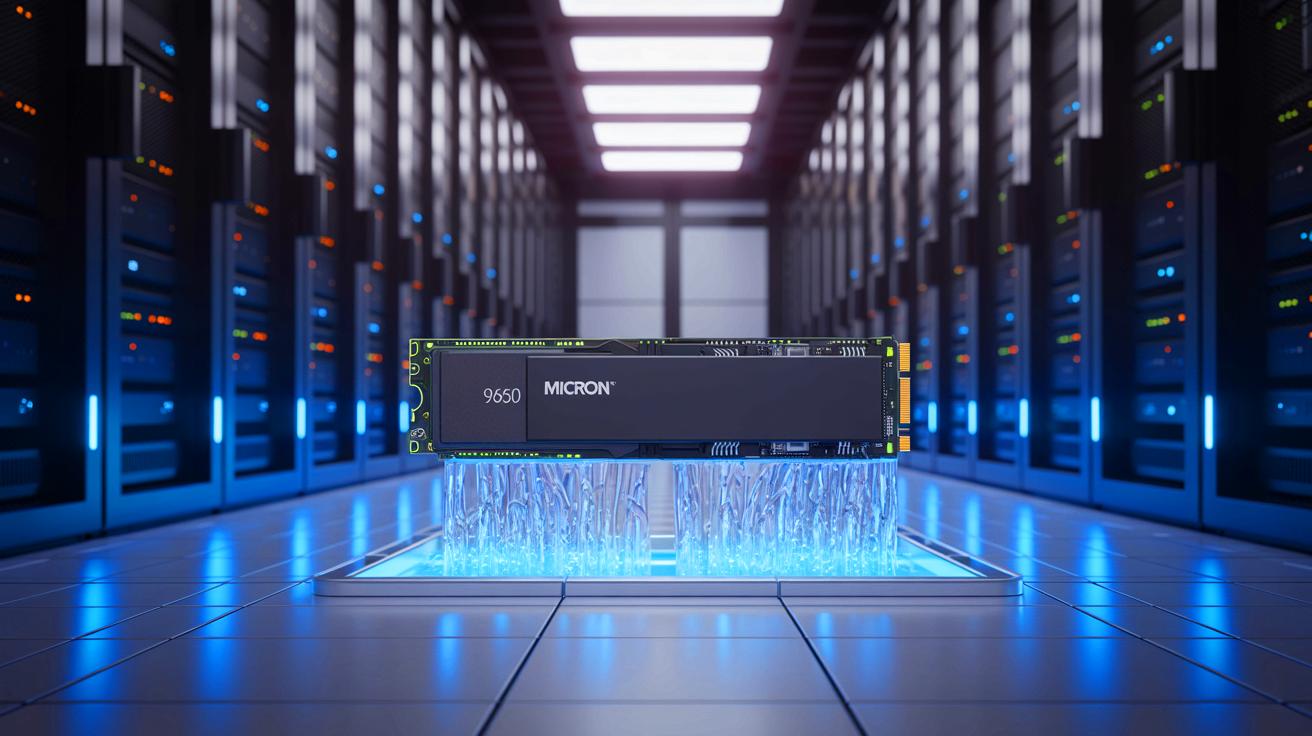
Micron Technology has made headlines with the introduction of its latest innovation, the 9650 SSD. Designed exclusively for data centers, this solid-state drive boasts unprecedented speeds and groundbreaking features, positioning itself as a leader in handling modern AI workloads. However, its industrial-grade form factors limit its accessibility to everyday consumers. As the tech world takes note, questions arise about the implications of such rapid advancements in storage technology.
Unmatched Performance in Data Centers
The Micron 9650 SSD is hailed as the world’s first PCIe Gen6 data center SSD. This cutting-edge device claims to deliver sequential read speeds of up to 28 GB/s, a significant leap from its predecessors. By offering high-speed data processing capabilities, it caters specifically to the demanding needs of AI-driven environments. The SSD’s performance metrics, including a random read rate of 5.5 million IOPS, position it as a key component for modern data centers.
Despite these advancements, the device’s industrial-grade E3.S and E1.S form factors mean that it remains out of reach for consumer desktops. While these specifications are impressive, the true measure of the 9650’s success will be its real-world performance under diverse operating conditions. The drive’s superior speed must translate into tangible benefits for data center operations to justify its adoption on a wider scale.
Revolutionizing Storage with Liquid Cooling
Micron has incorporated liquid cooling into the 9650 SSD, turning what was once a theoretical concept into a practical solution. This feature allows the SSD to maintain optimal performance even in dense server configurations. By reducing power draw and emissions, the liquid cooling system not only boosts performance but also aligns with sustainability efforts in data centers.
“With the industry’s first PCIe Gen6 SSD, Micron is not just setting the pace; we are redefining the frontier of data center innovation,” said Jeremy Werner, a senior executive at Micron. The integration of liquid cooling represents a significant step forward in addressing the challenges of heat dissipation and energy efficiency in high-performance storage devices.
Challenges and Opportunities in Adoption
The potential of the 9650 SSD extends beyond speed and cooling. As vendors explore its application in inference pipelines and retrieval-augmented generation, the device could become an essential infrastructure component for GPU-based servers. However, several factors will influence its adoption, including pricing and reliability. The ecosystem’s ability to integrate this next-gen technology will also play a critical role.
While Micron’s innovations are promising, the SSD’s market success will depend on its ability to meet the practical needs of data centers.
The balance between cutting-edge technology and deployment flexibility will be crucial in determining the drive’s impact on the industry.
As of now, the 9650 SSD represents a beacon of potential, poised to reshape the landscape of data storage.
Micron’s Broader Strategy in the Storage Market
Alongside the 9650, Micron has also unveiled the 7600 SSD based on PCIe Gen5 and the 6600 ION SSD, focusing on capacity. The 7600 promises sub-1 millisecond latency for demanding database applications, reinforcing Micron’s commitment to delivering high-performance solutions. With read speeds reaching 12 GB/s, the 7600 aims to surpass existing Gen5 SSDs in both speed and energy efficiency.
Micron’s strategy reflects a broader trend in the storage market, where speed, capacity, and energy efficiency are increasingly prioritized. As AI workloads continue to grow, the demand for fast, efficient storage solutions like those offered by Micron will likely increase. These advancements highlight the importance of storage technologies in supporting the evolving infrastructure requirements of modern computing.
As Micron’s 9650 SSD sets a new standard for data center storage, the industry watches closely to see how it will perform in real-world applications. The drive’s success could pave the way for further innovations in storage technology, raising important questions about the future of data management. How will these advancements shape the next decade of computing and influence the balance between consumer and industrial applications?