



Radeon AI Pro R9700 GPUs With “Revolutionary 32GB Memory” Divide Workstation Builders Over Blower Cooling Controversy
 By
Rhys Llewellyn
By
Rhys Llewellyn
| IN A NUTSHELL |
|
The launch of the Radeon AI Pro R9700 marks a significant milestone in the ever-evolving landscape of professional graphics processing units (GPUs). As the fastest GPU produced by AMD to date, the Pro R9700 is designed to meet the rigorous demands of professional computing, including artificial intelligence (AI), rendering, and scientific modeling. With major brands such as Asus, ASRock, Sapphire, PowerColor, and Gigabyte unveiling their versions, the market is witnessing an influx of high-performance GPUs tailored for enterprise use.
The Cutting-Edge Architecture and Specifications
The Radeon AI Pro R9700 is built on the advanced RDNA 4 architecture and powered by the Navi 48 chip. It stands out with its impressive 32GB of GDDR6 memory, which is double the amount found in its gamer-focused counterpart, the Radeon RX 9070 XT. The GPU also features 128 AI accelerators and 4096 stream processors, establishing it as a powerhouse for professional workloads. These specifications make it highly suitable for tasks that demand substantial computing power, such as AI training and scientific simulations.
AMD has clearly aimed to create a GPU that not only matches but exceeds the expectations of enterprise users. The robust memory and processing capabilities ensure that the Pro R9700 can handle complex tasks with ease. The focus on professional use is evident in its design, which supports multi-GPU setups and offers PCIe 5.0 connectivity for enhanced inter-card communication.
Designs Tailored for Enterprise Needs
Each brand offering the Radeon AI Pro R9700 has incorporated unique design elements to cater to specific enterprise requirements. Asus, for example, has introduced the Turbo Radeon AI Pro R9700, which features a 12V, 2×6 power connector and phase change thermal interface material. This design is aimed at managing power and thermal loads effectively, ensuring reliability during continuous use.
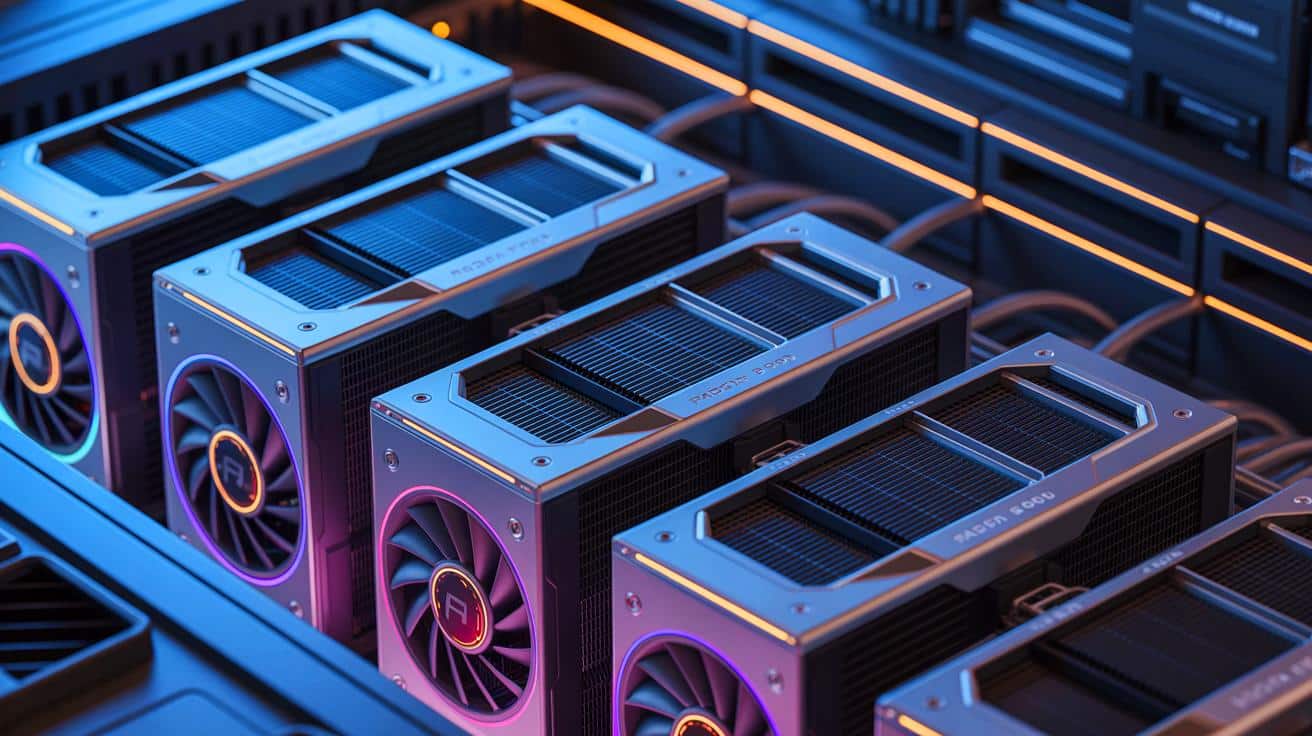
Gigabyte has also emphasized industrial design in its model, utilizing all-copper cooling and a blower-style turbo fan to promote airflow. This is particularly beneficial for dense workstation builds where multiple cards are installed side by side. Sapphire’s version stays close to AMD’s reference design, focusing on reliability and performance, while PowerColor and ASRock offer variations with enhanced cooling and durability features.
Market Competition and Price Dynamics
The introduction of the Radeon AI Pro R9700 comes at a time when competition in the GPU market is fierce. With a price point around $1,200, these GPUs are positioned as high-value options for enterprises looking to invest in cutting-edge technology. This pricing strategy places AMD in direct competition with other major players in the industry, such as Nvidia and Intel.
“Behold, the first photos of the most powerful video card money can buy, and it costs a cool $8,200.”
This quote underscores the competitive nature of the market, where cost and performance are critical factors for consumers. The Radeon AI Pro R9700 offers a compelling blend of power and affordability, making it a viable choice for businesses seeking to enhance their computational capabilities.
Future Prospects and Industry Implications
As more brands like MSI, XFX, Biostar, Acer, and others prepare to launch their versions of the Radeon AI Pro R9700, the market is poised for further expansion. The adoption of these GPUs in enterprise environments could lead to significant advancements in AI and scientific research, as organizations leverage the increased processing power for innovative projects.
The ongoing development and release of high-performance GPUs highlight the growing importance of computational power in today’s digital landscape. As industries continue to integrate AI and data-driven technologies into their operations, the demand for robust and reliable GPUs is expected to rise. This trend will likely drive further innovation and competition among GPU manufacturers.
The entry of the Radeon AI Pro R9700 into the market represents a pivotal moment for enterprise computing. It offers a glimpse into the future of professional-grade GPUs and their potential impact on various industries. As technology continues to evolve, how will businesses adapt to harness the full potential of these powerful tools?