


“This Changes Everything”: Discover the Mind-Blowing Razer Thunderbolt 5 Dock with 11 Ports and a Massive 8TB SSD in One Incredible Package
 By
Rhys Llewellyn
By
Rhys Llewellyn
| IN A NUTSHELL |
|
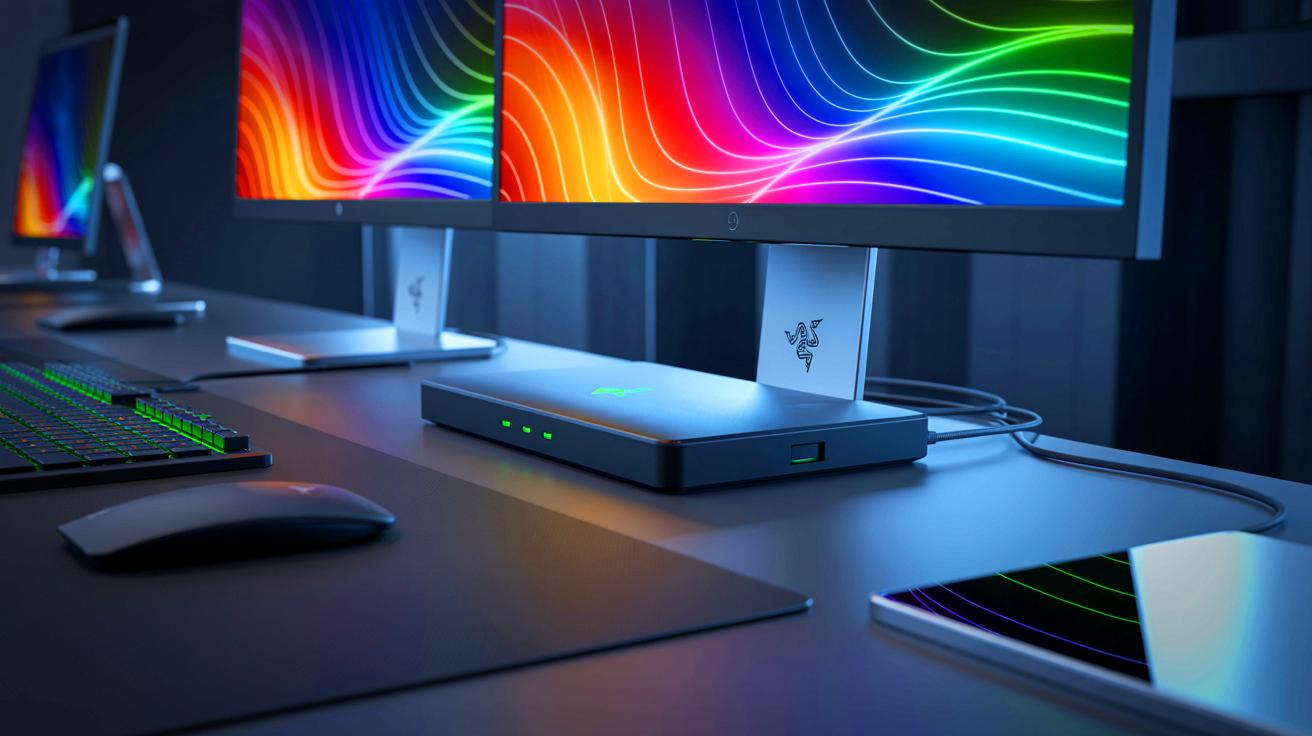
Razer has recently unveiled its latest innovation in the realm of technology accessories: the Razer Thunderbolt 5 Docking Station. This versatile device combines port expansion with substantial SSD storage capabilities, all within a sleek, compact unit. Designed to enhance data transfer speeds and graphic performance, the docking station is a must-have for users seeking to maximize their connectivity and productivity. With the ability to support multiple high-resolution monitors and fast file transfers, this Razer product sets a new standard in docking technology.
The Power of Thunderbolt Share
The Razer Thunderbolt 5 Docking Station introduces the cutting-edge Thunderbolt Share feature, a significant leap in the world of data transfer. This feature enables lightning-fast file exchanges between PCs without the need for network connectivity. Users who work across multiple systems will find this particularly valuable, as it streamlines workflows and enhances productivity. Thunderbolt Share is not just about speed; it’s about efficiency and the seamless integration of technology into daily operations.
Moreover, the ability to handle three 4K monitors at 120Hz through a single connection is a testament to the dock’s robust performance. This functionality is ideal for professionals who require expansive digital real estate, such as video editors, graphic designers, and data analysts. By consolidating these capabilities into one device, Razer ensures that users can maintain high performance without the clutter of numerous cables and devices.
Integrated SSD Storage: A Game Changer
One of the standout features of the Razer Thunderbolt 5 Docking Station is its integrated SSD storage, with options up to an astounding 8TB. This transforms the dock into a high-speed external drive, providing users with substantial storage capacity directly within their connectivity hub. For professionals dealing with large files, such as video projects or extensive datasets, this feature is invaluable.
The integration of SSD storage marks a significant step forward in the design and functionality of docking stations. It reduces the need for separate external drives, minimizing setup complexity and enhancing portability. With data speeds reaching up to 120Gb/s, users can expect rapid access to their files, ensuring that their workflow remains uninterrupted and highly efficient.
Navigating the Cost of Innovation
The Razer Thunderbolt 5 Docking Station is priced at $299.99 for the base model, while configurations with integrated storage can reach up to $999.99. This price range reflects the cutting-edge technology and versatile features packed into this device. However, potential buyers must consider whether the investment aligns with their specific needs and professional demands.
For users who prioritize high-speed data transfers and multi-display support, the cost may be justified by the enhanced productivity and streamlined workflow the dock offers. Conversely, those who might only require basic port expansion could find the price steep. Regardless, the combination of a high-speed SSD and a next-gen connectivity hub in one unit remains an enticing proposition for tech enthusiasts and professionals alike.
Complementary Innovations: The Core X V2
Alongside the Thunderbolt 5 Docking Station, Razer has introduced the Core X V2, a Thunderbolt 5 external GPU enclosure. This device supports full-length PCIe graphics cards, catering to users who need desktop-level graphics performance from their laptops. Priced at $499.99, the Core X V2 offers fan control and 140W laptop charging, enhancing its utility as a mobile workstation powerhouse.
The Core X V2 is tailored for a different but complementary audience to the docking station. It appeals to gamers and creative professionals who require high-performance graphics on the go. By pairing the Core X V2 with the Thunderbolt 5 Docking Station, users can create a comprehensive setup that covers both connectivity and graphic-intensive tasks, offering a seamless transition from desktop to mobile environments.
As technology continues to evolve, the demand for efficient, high-performance accessories like the Razer Thunderbolt 5 Docking Station and Core X V2 will only grow. These devices not only enhance productivity but also redefine what’s possible in terms of connectivity and performance. With such innovative solutions at their fingertips, how will users integrate these advancements into their daily workflows, and what impact will this have on future technology trends?