

China’s Secret AI Project Reveals Shocking Plans That Will Change Everything You Know About Technology Forever
 By
Rhys Llewellyn
By
Rhys Llewellyn
| IN A NUTSHELL |
|
China’s ambitions in artificial intelligence (AI) are taking a bold step forward with its latest $37 billion project in Wuhu. This initiative aims to establish a domestic alternative to the United States’ Project Stargate, a massive endeavor by OpenAI and Oracle. Although significantly smaller in scale compared to the $500 billion Stargate project, the Wuhu development represents a crucial move for Beijing. This project highlights the nation’s urgency to advance its AI capabilities amidst growing global competition and geopolitical tensions. As China transforms its landscape, turning former rice fields into high-tech data centers, questions about sustainability and technological viability arise.
Transforming Farmland into Data Centers
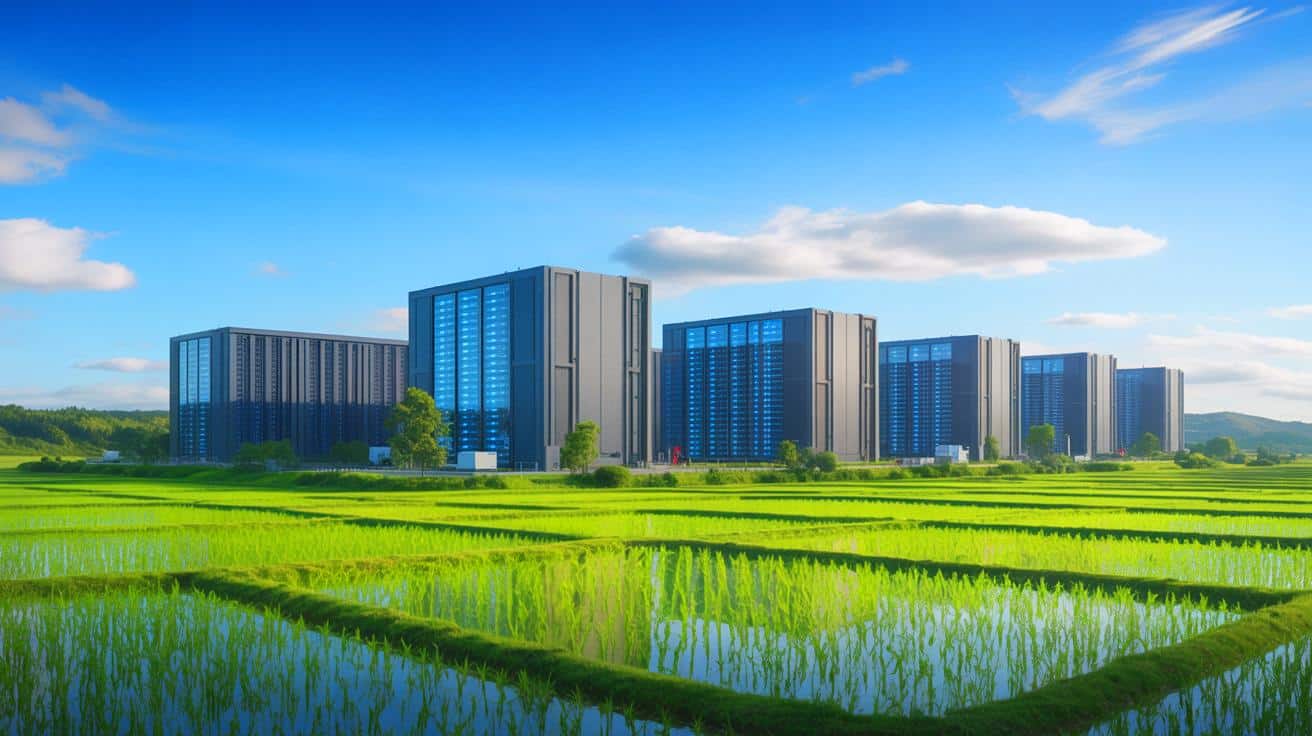
China’s decision to convert 760 acres of former rice paddies in the Yangtze River basin into a “data island” for AI development marks a significant shift in land use. This transformation underscores the dramatic measures the country is willing to take to compete with the U.S. in the AI arena. The site, located in Wuhu, eastern China, is strategically placed to serve urban centers like Shanghai, Hangzhou, and Nanjing, facilitating quicker AI data processing and delivery to densely populated areas.
This conversion also raises critical questions about resource allocation and environmental sustainability. The choice to repurpose fertile farmland for technological infrastructure reflects a prioritization of technological advancement over agricultural production. Critics argue this could have long-term implications for food security and ecological balance. However, supporters believe that the potential technological gains justify the trade-off, particularly as China seeks to close the gap with the West in AI development.
China’s AI Infrastructure Challenges
The Wuhu project aims to address China’s AI infrastructure challenges by consolidating existing computing capacities into a centralized network. This approach intends to enhance efficiency and reliability, especially in regions where data centers previously remained underutilized. The introduction of Huawei’s UB-Mesh technology is a pivotal component, offering redundancy and enabling the sale of excess compute power. This technology aims to connect both urban and remote data centers, improving overall network resilience.
However, the project faces significant hurdles, primarily due to China’s reliance on less powerful local chips. Export restrictions have limited access to advanced GPUs from companies like Nvidia, forcing China to rely on domestic alternatives. While Beijing is committed to developing self-sufficient AI infrastructure, the performance gap between local and foreign technology remains a concern. This reliance on local chips may hinder China’s ability to fully achieve its AI ambitions compared to Western competitors.
Financial and Geopolitical Implications
Financially, the Chinese government is heavily investing in the Wuhu project, offering subsidies that reportedly cover up to 30% of AI chip procurement costs. This financial backing reflects Beijing’s urgency to operationalize the new data clusters and strengthen its AI capabilities. Despite the significant investment, China’s current share of global AI compute power stands at only 15%, compared to the United States’ 75%. This disparity highlights the immense challenge China faces in catching up with its American counterpart.
Geopolitically, the development of AI infrastructure in China is closely tied to the broader context of U.S.-China relations. As tensions between the two nations persist, China’s push for technological independence becomes increasingly critical. The Wuhu project is not only an economic endeavor but also a strategic move to assert technological sovereignty and reduce reliance on Western technology. This pursuit of self-sufficiency in AI development is a clear response to international pressures and export restrictions.
Potential Impact on Global AI Landscape
The Wuhu project could significantly influence the global AI landscape by potentially altering the balance of technological power. As China aggressively pursues advancements in AI, it could reshape international dynamics in technology and innovation. The project’s outcome will determine whether China can establish a competitive edge in AI and challenge the existing dominance of Western countries in this field.
Beyond technological competition, the conversion of farmland into data centers raises broader questions about sustainability and ethical considerations. The environmental impact of such large-scale infrastructure projects is a growing concern, particularly regarding energy consumption and ecological disruption. As nations worldwide grapple with the balance between technological progress and environmental sustainability, China’s approach in Wuhu may serve as a case study for future developments.
As China forges ahead with its ambitious AI project in Wuhu, the global community watches closely to see how these developments unfold. The transformation of farmland into data centers represents a bold step in China’s quest for AI dominance, yet it raises critical questions about sustainability, resource allocation, and technological viability. How will China navigate these challenges, and what implications will its actions have on the future of AI and global technological competition?