


“Unbelievable Price”: This Mystery Mini PC Handles 8K Screens for Under $330 (and You Won’t Believe It)
 By
Declan Moriarty
By
Declan Moriarty
| IN A NUTSHELL |
|
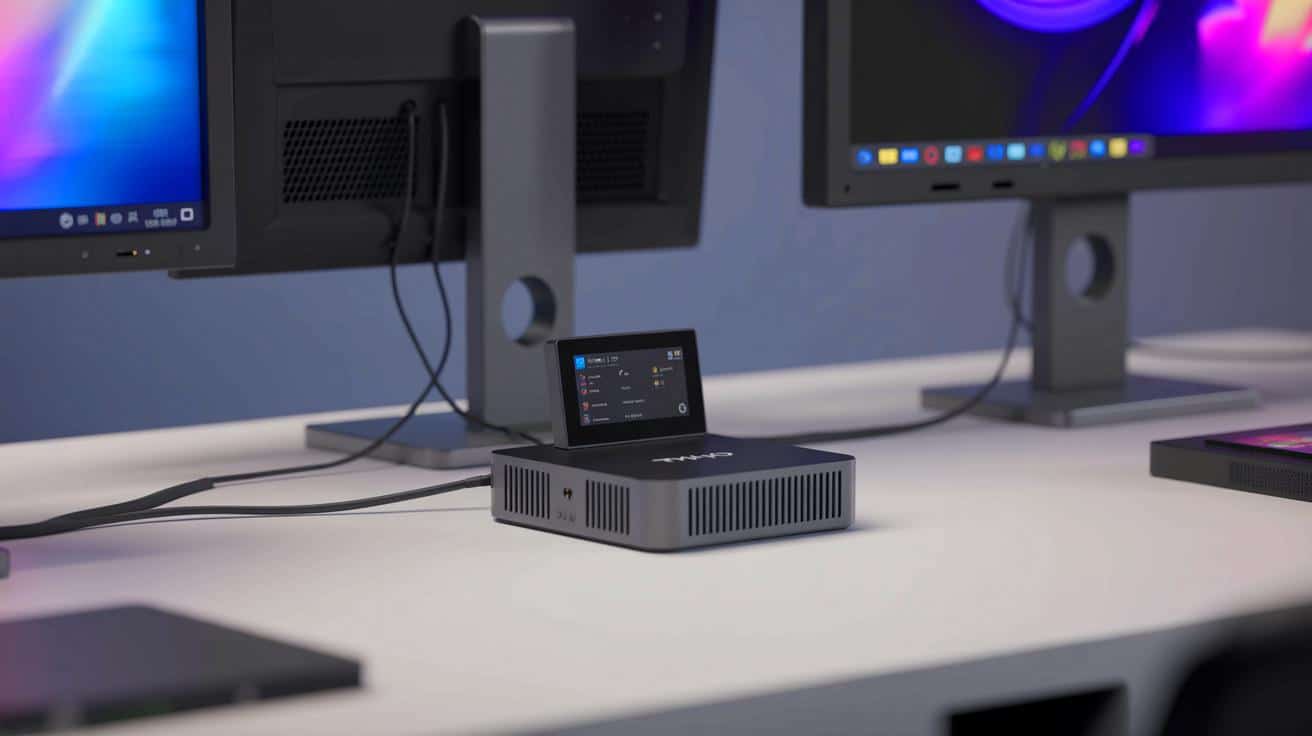
The TexHoo ZHR mini PC has recently entered the competitive market of compact computing systems. Built around the powerful AMD Ryzen processors, this device promises to deliver robust performance in a small package. What sets the TexHoo ZHR apart is its capability to support up to four 8K monitors, a feature that is uncommon in mini PCs, especially at its price point of approximately $323. However, as a new player in the field, TexHoo faces the challenge of gaining consumer trust in a market dominated by well-known brands. This article delves into the capabilities and challenges faced by the TexHoo ZHR.
Innovative Features and Design
The TexHoo ZHR mini PC is designed to cater to users seeking high performance in a compact form. One of its standout features is the inclusion of a small LCD screen that displays real-time system data. This feature, while seemingly cosmetic, offers practical benefits by providing users with immediate feedback on their system’s performance. Such a feature is rarely found in other mini PCs, marking TexHoo’s entry into the market with a unique selling proposition.
Moreover, the TexHoo ZHR is equipped with a dual-fan cooling system. This design choice ensures that the high-performance CPU and integrated GPU can operate efficiently without overheating. The minimalist chassis adds to its appeal, providing a balance between aesthetics and functionality. This combination of features positions the TexHoo ZHR as a strong contender in the mini PC market, especially for those who prioritize both performance and innovative design.
Performance Capabilities
Under the hood, the TexHoo ZHR offers two configurations powered by AMD Ryzen processors. Users can choose between an eight-core Ryzen 7 6800H and a six-core Ryzen 5 6600U. Both options utilize AMD’s Zen 3+ technology and incorporate Radeon graphics based on the RDNA2 architecture. These specifications enable the TexHoo ZHR to handle a variety of tasks, from 4K multimedia processing to moderate gaming and productivity workloads.
The model featuring the Ryzen 7 6800H is particularly aimed at users who demand high performance similar to that of a workstation but prefer the compactness of a mini PC. This configuration provides a compelling option for professionals who need powerful computing resources without the bulk of a traditional desktop setup.
Connectivity and Storage Options
Connectivity is a strong suit of the TexHoo ZHR. It supports up to four 8K displays, utilizing two HDMI 2.0 ports, a DisplayPort 1.4, and a USB-C port. This feature is particularly appealing to users who require multiple high-resolution displays for their work or entertainment needs. Additionally, the device includes dual Gigabit Ethernet ports, Wi-Fi 6, and Bluetooth 5.2, ensuring robust connectivity options.
Storage capabilities are equally impressive. The TexHoo ZHR supports two M.2 2280 NVMe PCIe 4.0 SSDs, allowing for a total storage capacity of up to 8TB. With 16GB of LPDDR5 6400MHz RAM, this mini PC offers flexibility and speed in a portable format, making it suitable for a range of demanding applications.
Market Challenges and Brand Recognition
Despite its impressive specifications and unique features, the TexHoo ZHR faces significant challenges in gaining market traction. Brand recognition is a critical hurdle, as TexHoo is not a familiar name in the tech industry. This lack of recognition could impact consumer trust, particularly concerning long-term support, firmware updates, and overall build quality.
The competitive landscape of mini PCs is dominated by established brands that have built reputations for reliability and customer service. For TexHoo to succeed, it will need to convince consumers of its commitment to quality and support, potentially through customer testimonials, reviews, and robust post-purchase service options.
As the TexHoo ZHR steps into the mini PC arena, it brings with it a mix of innovation and uncertainty. While its technical capabilities are impressive, the challenge lies in establishing trust and recognition among potential buyers. Will TexHoo manage to carve out a niche in the crowded mini PC market, or will brand loyalty keep consumers tied to more established names? The future of TexHoo and its ZHR mini PC largely depends on how it addresses these critical challenges. What strategies could TexHoo employ to enhance its brand image and consumer trust?