



“It’s a Minimalist Nightmare”: This New Turntable Sparks Conflict Over Its Unseen Controls and Removable Disc Design
 By
Rhys Llewellyn
By
Rhys Llewellyn
| IN A NUTSHELL |
|
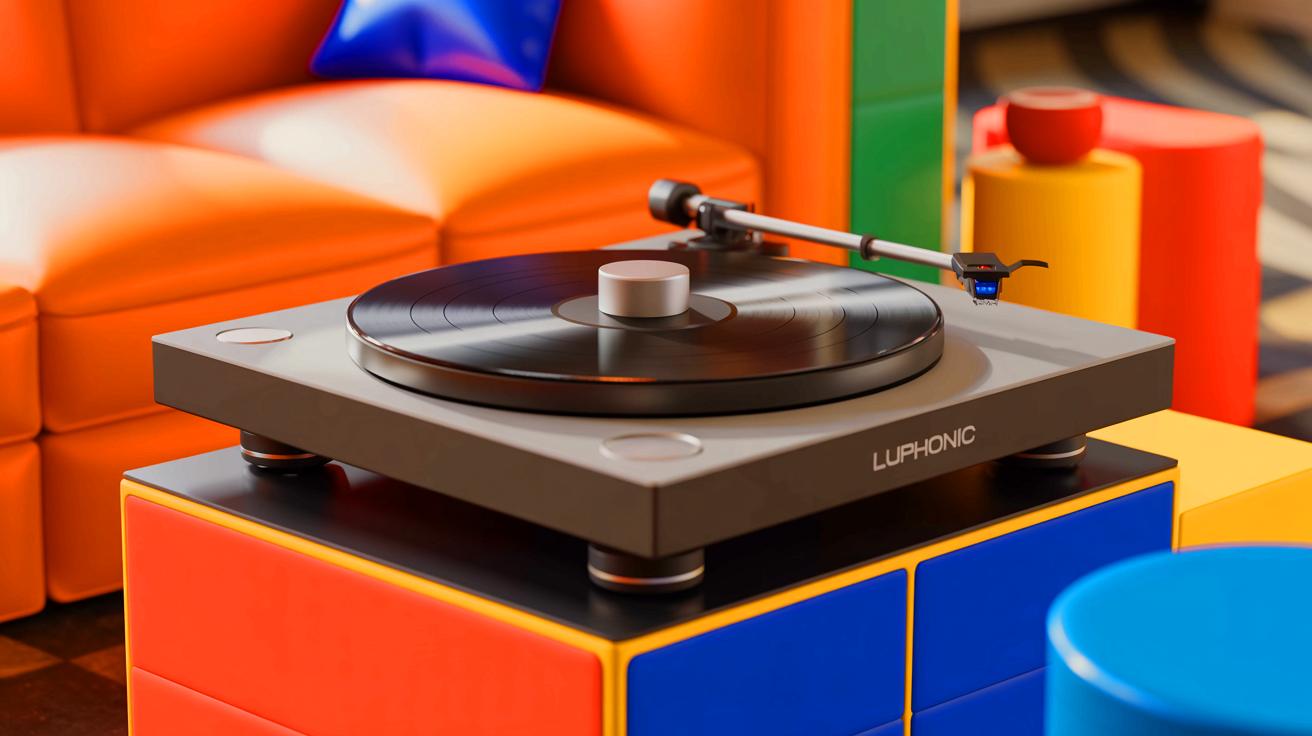
The Luphonic H2 turntable represents a significant shift in the design and functionality of audio equipment. Unlike traditional turntables, the H2 lacks visible buttons and switches, opting instead for a unique control mechanism involving a small puck. This minimalist approach is not only about aesthetics but also about redefining user interaction with technology. The turntable’s design emphasizes simplicity while incorporating advanced materials and engineering to deliver high-quality audio performance. With a price tag of $4,995, the Luphonic H2 is positioned as a premium product that challenges conventional norms in the audio industry.
Revolutionizing Turntable Controls
The Luphonic H2 turntable breaks away from traditional control methods by eliminating buttons and switches altogether. Instead, users interact with the device using a small circular puck. Placing the puck on a specific marker on the turntable activates it, with different orientations of the puck controlling the playback speed. For example, positioning the puck with the dark side up starts the turntable at 33 RPM, while flipping it over changes the speed to 45 RPM. Removing the puck stops the turntable entirely. This innovative approach to control not only enhances the minimalist design but also offers a novel user experience.
However, this design choice comes with its own set of challenges. For instance, losing the puck can render the turntable inoperable until a replacement is obtained, potentially leading to frustration for users. Despite this, the H2’s unique control mechanism exemplifies the intersection of design and functionality, pushing the boundaries of how audio devices are traditionally operated.
Advanced Materials and Design
The construction of the Luphonic H2 turntable is as innovative as its control mechanism. The turntable is built with a three-layer chassis shaped like a wide letter H. This design incorporates a vibration-damping rubber layer sandwiched between two layers of Corian, a material commonly used in kitchen countertops. Corian’s high density and low resonance make it an ideal choice for minimizing vibrations, which is crucial for high-fidelity audio reproduction.
Additionally, the use of Corian extends to the platter, which is driven by a microprocessor-controlled synchronous motor. The motor operates a belt that turns the Corian platter atop an aluminum sub-platter. This setup is complemented by a steel spindle resting on a ceramic ball bearing, ensuring smooth and stable operation. The entire assembly sits on four thermoplastic feet, further enhancing its vibration-damping capabilities.
The Role of the K2 Tonearm
The Luphonic H2 is equipped with the company’s proprietary K2 tonearm, which features a carbon-composite arm and a digitally printed headshell. This combination provides both strength and precision, essential for high-quality sound reproduction. The tonearm allows for straightforward adjustments, including azimuth and anti-skate, enabling users to fine-tune their listening experience.
The use of advanced materials and precision engineering in the tonearm reflects Luphonic’s commitment to delivering a superior audio experience. By integrating these features, the H2 not only stands out in terms of design but also in performance, offering audiophiles a turntable that meets the highest standards of sound quality.
Pricing and Market Position
With a retail price of $4,995, the Luphonic H2 is targeted at a niche market of audiophiles and design enthusiasts who value both aesthetics and performance. This places the H2 in the premium segment of the turntable market, competing with other high-end brands that prioritize craftsmanship and innovation.
Despite its high price point, the H2 offers unique features that differentiate it from competitors. Its minimalist design, advanced materials, and innovative control mechanism make it a compelling choice for those seeking a cutting-edge audio experience. However, potential buyers must weigh these advantages against the practical challenges posed by its unique control system and high cost.
The Luphonic H2 turntable represents a bold step forward in audio design, merging aesthetic minimalism with technological innovation. While its unique control mechanism and use of advanced materials set it apart from traditional turntables, these features also introduce new challenges and considerations for users. As the audio landscape continues to evolve, will more manufacturers embrace such radical design changes, or will they stick to tried-and-true methods? This question remains open as the industry watches the impact of the H2 unfold.