


Google Mixboard Reveals This Mind-Blowing AI Secret That Will Completely Transform Your Creative Projects Forever
 By
Rhys Llewellyn
By
Rhys Llewellyn
| IN A NUTSHELL |
|
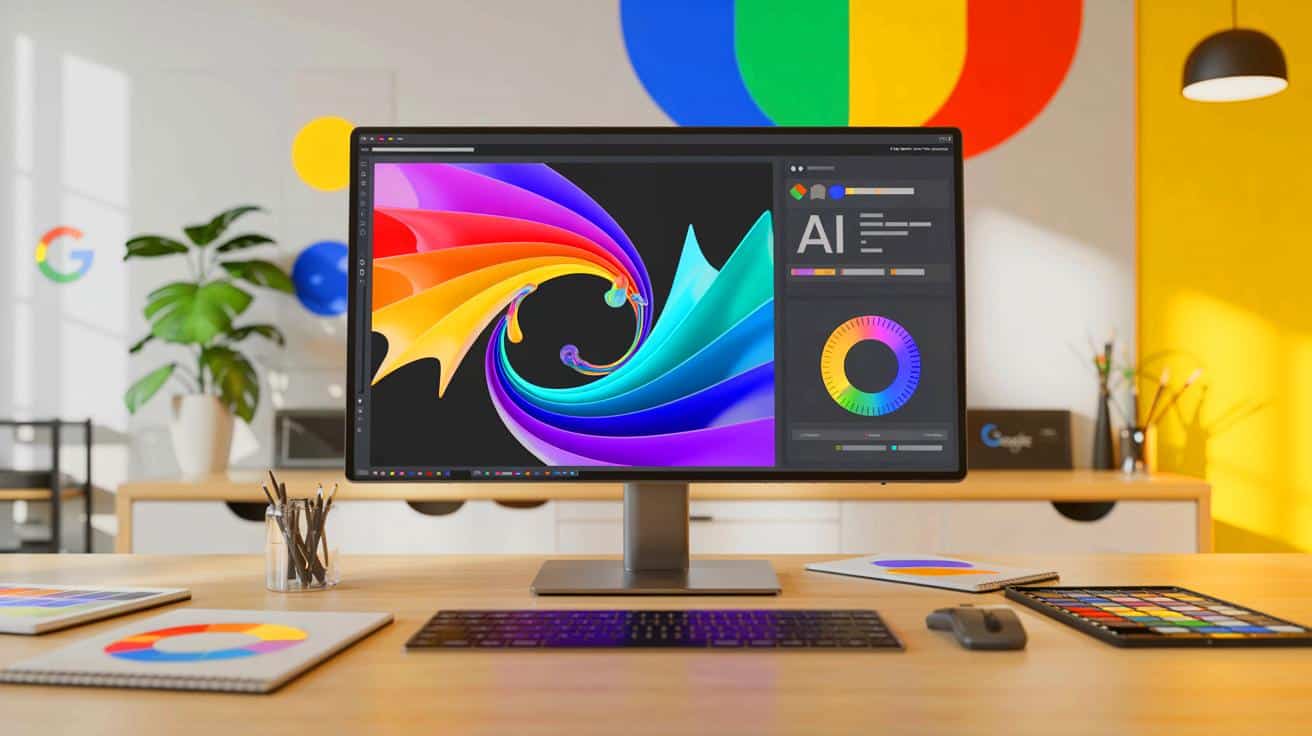
Google has unveiled Mixboard, a new experimental tool that leverages artificial intelligence to assist users in creating “visual concepting boards.” Positioned as a tool for ideation and brainstorming, Mixboard allows users to input text prompts to generate visuals, color palettes, and more. This tool is now in an experimental beta phase in the U.S., and it showcases how AI can be utilized creatively to expand and refine ideas. Unlike other tools such as Pinterest or Canva, Mixboard integrates AI from the start of the creative process, allowing for a more fluid and intuitive experience.
Revolutionizing Visual Creativity
Google’s Mixboard is not merely an ordinary digital canvas; it is a revolutionary tool that integrates AI into the creative process, offering users a unique way to explore and refine their ideas. The tool operates by allowing users to input text prompts, which the AI then translates into visuals, color palettes, and textual elements. This process is facilitated by Google’s Nano Banana AI image generator, a technology that has already garnered attention for its capabilities in creating 3D figurines.
With Mixboard, users can experiment with various themes and styles, such as “cozy minimalist home office” or “retro space-themed board game.” The AI’s ability to generate these concepts based on natural language inputs enables users to visualize possibilities that might not have been immediately apparent. This integration of AI into the creative process marks a significant step forward in how technology can aid in ideation and artistic exploration.
An AI-Driven Canvas
Mixboard distinguishes itself from other visual tools by integrating AI at the onset of the creative process. Unlike platforms that treat AI as a supplementary feature, Mixboard places it at the core of its functionality. The AI acts as a co-creator, enabling users to tweak and refine visuals with ease. This allows for a dynamic interplay between the user’s ideas and the AI’s capabilities.
Moreover, users can import their own images and modify them using AI, or start from scratch with a new board. The tool’s flexibility is evident in its ability to regenerate boards or generate variants based on user feedback. This iterative process provides users with an unparalleled level of creative freedom, allowing them to explore different directions and outcomes with minimal effort.
Positioning Among Competitors
As Google continues to develop its AI initiatives, Mixboard represents a strategic move to occupy a niche within the realm of consumer-friendly AI tools. While other companies like Meta and Pinterest are also experimenting with AI-powered visual tools, Mixboard sets itself apart by embedding AI within the initial stages of creation. This approach contrasts with competitors, which often incorporate AI at the end of the creative process.
Mixboard’s emphasis on AI-driven co-creation is a significant departure from traditional image editing tools. It offers users a more intuitive and seamless experience, blending human creativity with technological innovation. By positioning Mixboard as a starting point for brainstorming and ideation, Google aims to capture the interest of users seeking a novel approach to visual creativity.
The Future of AI in Creative Tools
Google is currently testing Mixboard within the U.S., using this experimental phase to gather insights into how users interact with the tool and identify potential areas for improvement. This careful approach allows Google to refine Mixboard’s functionalities and address any challenges that may arise. By incorporating user feedback, Google hopes to create a tool that meets the diverse needs of its audience.
As AI continues to evolve, tools like Mixboard offer a glimpse into the potential future of creative technology. By seamlessly integrating AI into the creative process, Mixboard challenges traditional notions of content creation and provides users with new ways to express their ideas. The ongoing development of such tools underscores the growing importance of AI in shaping the landscape of digital creativity.
With the introduction of Mixboard, Google has taken a bold step in redefining the relationship between AI and creativity. As the tool continues to evolve, it raises important questions about the future of creative technology. How will AI-driven tools impact the way we think about and engage with the creative process?